Ninth graders might not want to think about college yet, but that’s when many Kentucky high schools begin pre-college curriculum.
Those efforts could be making a difference, as the number of Kentucky high school graduates who go on to attend college has increased in the last few years.
But there are still gaps in the state’s college access services.
Out of every 100 Kentucky students who enter the ninth grade, 70 will graduate from high school, 30 will enter college and 17 will graduate from college, according to the Kentucky College Acccess Network’s Web site.
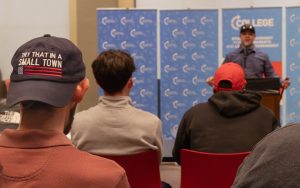
KentuckyCAN, an organization that focuses on increasing college access opportunities in the state, heard a presentation last week outlining areas for improvement in state access to higher education, said Joe McCormick, executive director of KentuckyCAN.
Tom Mortenson, an independent higher education policy analyst, who gave the presentation, said Kentucky’s high school graduation rate has increased over the past three years and has reached the national average.
In 2006, Kentucky jumped above the national average in the number of high school graduates who have gone on to college in the following year, which Mortenson said is a testament to the state making higher education a priority.
“There aren’t very many states that try as hard as Kentucky to support higher education,” he said.
Karen Swiney, a guidance counselor at Bowling Green High School, said students are urged to follow a pre-college curriculum beginning in ninth grade and are strongly encouraged to go on to college.
The counseling office provides many resources for students to choose and apply for a college, including having college representatives visit and putting college and scholarship information on the school’s Web site, Swiney said.
The high school doesn’t push Western more than other universities but does work more closely with the university since it’s so close, she said.
Mortenson said Kentucky provides attractive possibilities for higher education, because more people are coming to the state for college than are leaving it.
But among low-income students, college participation rates are lagging behind the national average, Mortenson said.
Kentucky ranks 47th in both per capita income and the percentage of adults with college degrees, he said.
One of the state’s challenges is to educate low-income students, who likely come from families where neither parent has a college degree, Mortenson said.
By developing a more educated workforce, Kentucky’s standard of living will increase, he said.
There are also issues with gender equality when it comes to college graduation rates, Mortenson said.
The ratio of women to men who graduate from Kentucky colleges is 60 to 40, Mortenson said.
Kentucky needs to do a better job of making sure that boys are just as academically strong as girls, he said.
KentuckyCAN will use the information from Mortenson’s presentation to raise awareness and advocate for key issues brought up in the presentation, McCormick said.